
Peruvian football culture is a subculture of South American sports that often gets overlooked from its main characters. When somebody shares something pertaining to South American football, people often head to your Argentines or Brazilians, or even your Uruguayans, of the continent to find what the very best aspects of football are over there.
And to their credit at times, rightfully so when you have figures like Pele, Maradona or Messi at your disposal. However, South America’s passion for the game runs far deeper from that little nook, as a country such as Peru also boasts a rich heritage in the game and a story to tell of it’s own, especially in it’s capital city of Lima.
With legends such as Teofilo Cubillas, Hector Chumpitaz and Claudio Pizarro, Peru has a history with football that boasts both heritage and prestige akin to it’s other football-obsessed counterparts worldwide.
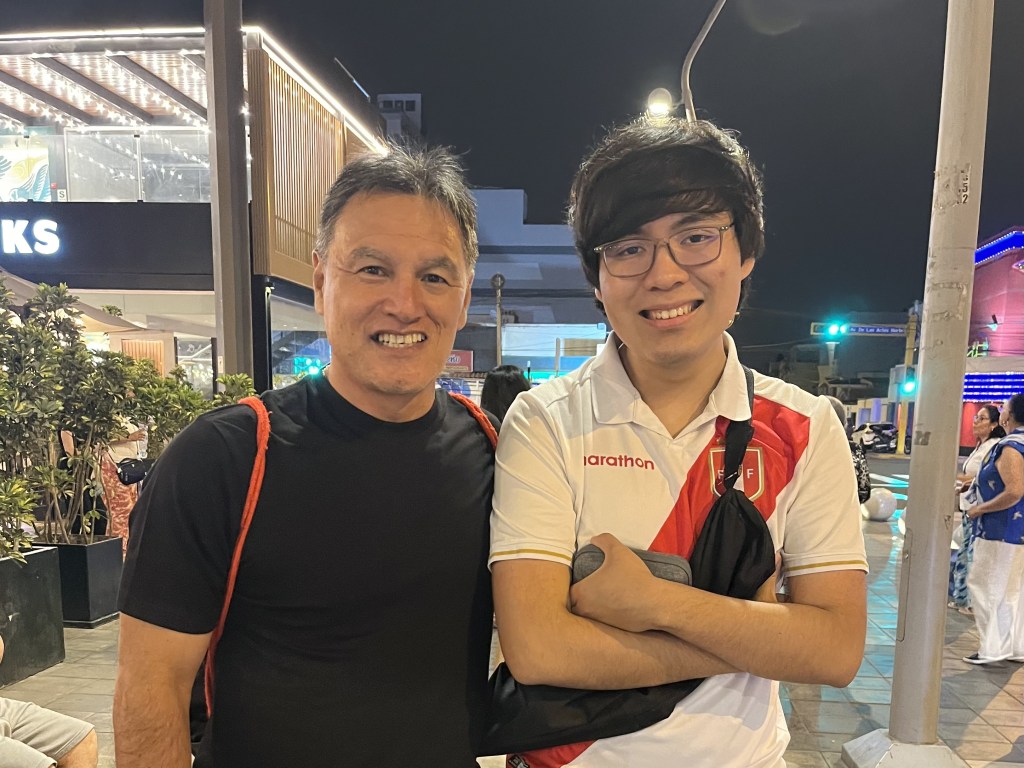
I spoke to former footballer, native to Peru’s capital city and player of one of 3 of the biggest teams in the country, Edwin Uehara on what football culture in Peru is like.
When asked about what defines the sporting landscape of football in not only Peru but in Lima as well, he describes it as a game “with little surprises.”
“Peru is a country where football is lived from your adolescence, there’s lots of passion for the sport here. The clubs here in Lima drive the strongest levels of it’s fandom, with clubs such as Universitario, Sporting Cristal and Alianza Lima. They will always be at the forefront of the domestic competitions here.”
In Peru, these clubs are known as The Big Three, dubbed this due to their prestige and accolades gained over the years that no other clubs in the country have been able to replicate or better. Universitario, however, seems to be the one that stands out the most from the rest.
Described with a style of play by Edwin Uehara as “dirty, aggressive,” and with a mentality of “winning by any means necessary,” it’s identity parallels its South American counterparts, such as Boca Juniors for putting winning above all else, in levels of importance. Founded in the 1920s by students of the prestigious University of San Marcos, “La U” hold the record for the most league titles won in the country’s history, and being one of only two clubs in Peru to have made a Copa Libertadores final. Through these achievements, it’s easy for one to see why this club holds the iconic prestige it does, in the local game.
However despite being one of only two clubs to have made the continent’s biggest competition’s final, it’s counterparts and rivals, Sporting Cristal, not only share that record as well, but boast their own level of history in Peruvian football.
Nicknamed “Los Cerveceros”, through their mid 50s foundation from stockholders in the nation’s biggest brewing company Backus and Johnston, Sporting Cristal have 20 titles to their name, the third most of any team in the country. Holding the record for the longest unbeaten streak in Copa Libertadores history and dubbed “born a champion” by local journalists for winning the league in their first ever season of existence, Sporting Cristal go on to show that football in Lima amongst it’s big 3, have an identity of their own that cannot be ignored.
And yet even though Sporting Cristal proudly boast the prestige that they do, they are still not the headliners for the biggest rivalry in the country, and tussle between not only Universitario for the title of being the face of football in Peru, but one other club as well.
Founded through working class youths in the Chacaritas neighborhood, Alianza Lima are one of the two most popular and well known teams hailing not only from Lima, but the country as well.
With 25 titles to their name, just 2 shy of Universitarios’, “Los Blanquiazules” hold a bold history that not only rivals their Lima rivals, but arguably betters it as well. This is due to the fact that their players are what have arguably been the driving force for the National Team’s previous successes. Peru’s greatest ever player, Teofilo Cubillas, played for this club whilst he took Peru to a Copa America championship in 1975, making them champions of South America for just the second time in their history.
Making also their highest ever finishes at the World Cup in 1970 and 1978, Peruvian supporters would have to thank Alianza Lima for the successes within the national team’s most successful period ever, as the makeup of most of the squad, hailed from the Lima side.
These three clubs all aim and compete between each other in heated local derbies, in an effort to become the driving force and face of the country’s footballing landscape. These derbies contain some of the most intense atmospheres in the continent, with oftentimes showcasing football’s ugliest traits with occasional fan violence, corruption scandals, and title disputes over the course of their affairs.
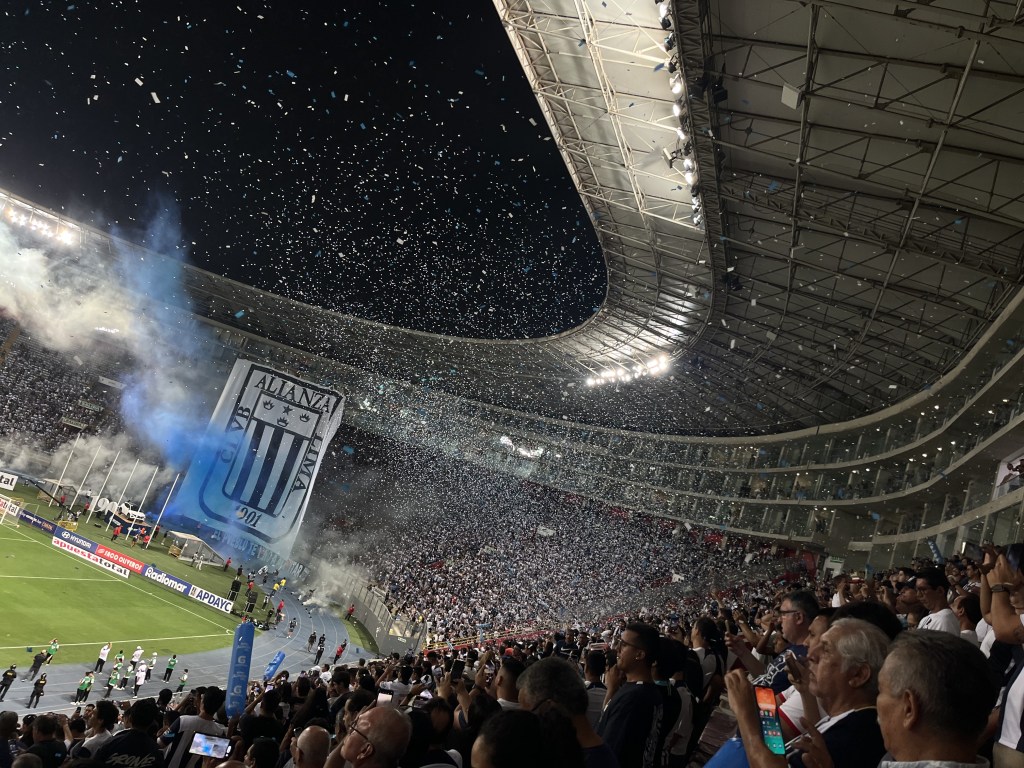
I gained the privilege to visit the derby between Alianza Lima and Sporting Cristal last week, played in the National Stadium, to see just how relentless the atmosphere in Peru can get for it’s local derbies.
Due to the momentous occasion of the derby, the match was held in the National Stadium of Peru for additional dramatic effect, to an already dramatized fixture.
Immediately I took note of the local discourse surrounding the days leading up to the match, that one half of the supporters section for Alianza Lima would be potentially barred from attending the match. This comes in wake of an incident in the local neighborhood of Santa Anita, where clashes amongst supporters of Alianza Lima and Universitario led to the shootings of 3 children, all of which fortunately survived.
This spur of violence comes from the results that came just over a week prior, where the two teams clashed in the country’s national derby.
Alianza Lima supporters calmly made their way into the stadium, despite heavy police presence throughout the corridors of the arena. They ramped up the atmosphere to an almost deafening level, even hours before kickoff.
After about an hour and a half of pre match festivities, downing Callao pilsner and admiring the supporters group section, it was time for the match to start.
The fans shot flares, smoke bombs, confetti, balloons and just about any other pyrotechnic you can conceive to be allowed at a football match to animate their side. A massive tifo covered the southern half of the stadium, boasting with pride their identity and the love they hold for their football club.
Throughout the entire 90 minutes of the match, not a single soul in that arena stopped singing, chanting or yelling for Alianza Lima. However, the match did not go to plan for the Blanquiazules, as Sporting Cristal came out on top 2-1 at the end of the night.
This loss, despite the festivities to motivate their team, did not go without it’s consequences however.
Like most South American football fan subcultures, the passion these fans have for their teams are often taken to extremities. In Peru, this is no different, as the fans yelled, jeered and belittled the side for sometimes misplaced passes, conceding twice, and walking down the tunnel after the match, failing to win the local derby.
It is almost deemed like a cardinal sin to lose these matches, in a part of the world where the sport is treated almost like a religion to many, and a facet of their culture for all.

Edwin Uehara, stood witness and victim to the dramatic highs of the buildup to a derby match in Lima, and the damning lows that come with losing.
During his time in Universitario, he described the buildup to the Peruvian Clasico as something different, as if “the air was different, you could tell that you felt just the slightest bit more motivated for these kinds of matches because the support you had from the fans was like none other. It was special.”
With just one loss however, no matter the rival, that feeling of unconditional love and reliance from those very same supporters that backed you, could easily turn into a nightmare. As Edwin recalls one instance, where players would be “locked in their changing rooms inside the stadium for hours, due to the hoards of angry supporters waiting to attack you outside.”
“They would come to your house at times and shoot the lights from the outside entrances of your homes. It’s very hard to change the minds of a fan sometimes.”
During the Alianza Lima match last week, there was an announcement made throughout the stadium by an official, stating that the use of smoke bombs was strictly prohibited in the ground. This statement came shortly after the use of one in the southern side of the arena.
Riot police ushered in to dismantle fights breaking out in the same stands, a reaction out of pure passion and anger by the fans, as a result of the result that currently stood at the time of losing 2-1 to their bitter rivals.
With the clock eventually winding down to the minutes, and to the seconds left, Alianza Lima would go on to lose the match. However despite the loss, the fans and supporters continued long into the night outside the arena chanting and singing their songs for their beloved club. Songs and passion that have been passed down from generation to generation, steadfast in their support, unfettered from the bitter result.
They continued to buy merchandise, continued to talk about the club, and boasting passionately about what needs to be changed in their current situation to news outlets outside the venue whilst vocalizing their unconditional support, long into the night.
Football in this country is showcased in many different means, some more welcoming than others, and others more disdaining. This has been a constant in South American fan culture as well, but Peru, is a country far overlooked when it comes to the scene of it’s own.
Sharing the same traits as the rest of their South American counterparts, and often with it’s own unique and diverse history, Peruvian football is something that should be celebrated and showcased when given a chance.
Despite the ugly and the high greats that accompany it, the Incas have a story to tell, and a story that cannot be overshadowed by it’s game anymore. The passion these fans have for their game is infectious, the emotion they shed for their teams is crippling, and the importance of winning for their sides is monumental.
Peruvian football has a story that is both unshakable to it’s core, and unignorable in it’s history, both in South America, and football as a whole.
 Diego Hiroshi